


Essential estate planning documents Texas notary guidelines require a last will and testament, durable power of attorney, and advance directives to be signed before a public official to ensure legal validity. Notarization is critical under Texas law to make these documents self-proving and enforceable, which ultimately simplifies the probate process for beneficiaries.
Finalizing your estate plan brings a sense of relief, yet a single technical oversight during the notarization process can jeopardize your entire legacy. In Texas, the validity of documents like a Last Will and Testament or a Statutory Durable Power of Attorney depends on precise adherence to state statutes. Without a knowledgeable notary who understands the nuances of self proving affidavits and medical directives, your family may face unnecessary legal hurdles or probate delays. At DFW Apostille & Notary Services, we recognize that professional execution is the final, vital step in securing your future. This guide examines the essential requirements for Texas estate planning documents; we will detail everything from the role of the self proving affidavit to the logistics of signing in sensitive environments like hospitals. You will also learn how remote online notarization offers a modern, secure solution for your planning needs.
Why Proper Notarization is the Foundation of Your Texas Estate Plan
Drafting a comprehensive set of legal instructions with an attorney is a vital first step, but the actual execution of those papers is what gives them life in a court of law. In Texas, the probate process is rigorous; even minor clerical errors or procedural lapses during the signing can lead to a judge declaring a plan invalid. This article shifts the focus from legal definitions to the practical logistics of estate document notarization, ensuring that every signature carries the weight intended by the signer.
Securing a qualified professional for estate planning documents Texas notary needs is essential for long term validity. Proper execution is not merely about a stamp; it involves the careful verification of identity, mental capacity, and the voluntary intent of the principal, often while coordinating multiple witnesses in a single session. DFW Apostille & Notary Services specializes in managing these complex appointments, traveling directly to clients in Arlington, Dallas, and Fort Worth. By bringing professional precision to the home, office, or bedside, we provide the technical expertise required to ensure that the final step of your estate plan is as robust as the legal advice that created it.
The Last Will and Testament and the Critical Self Proving Affidavit
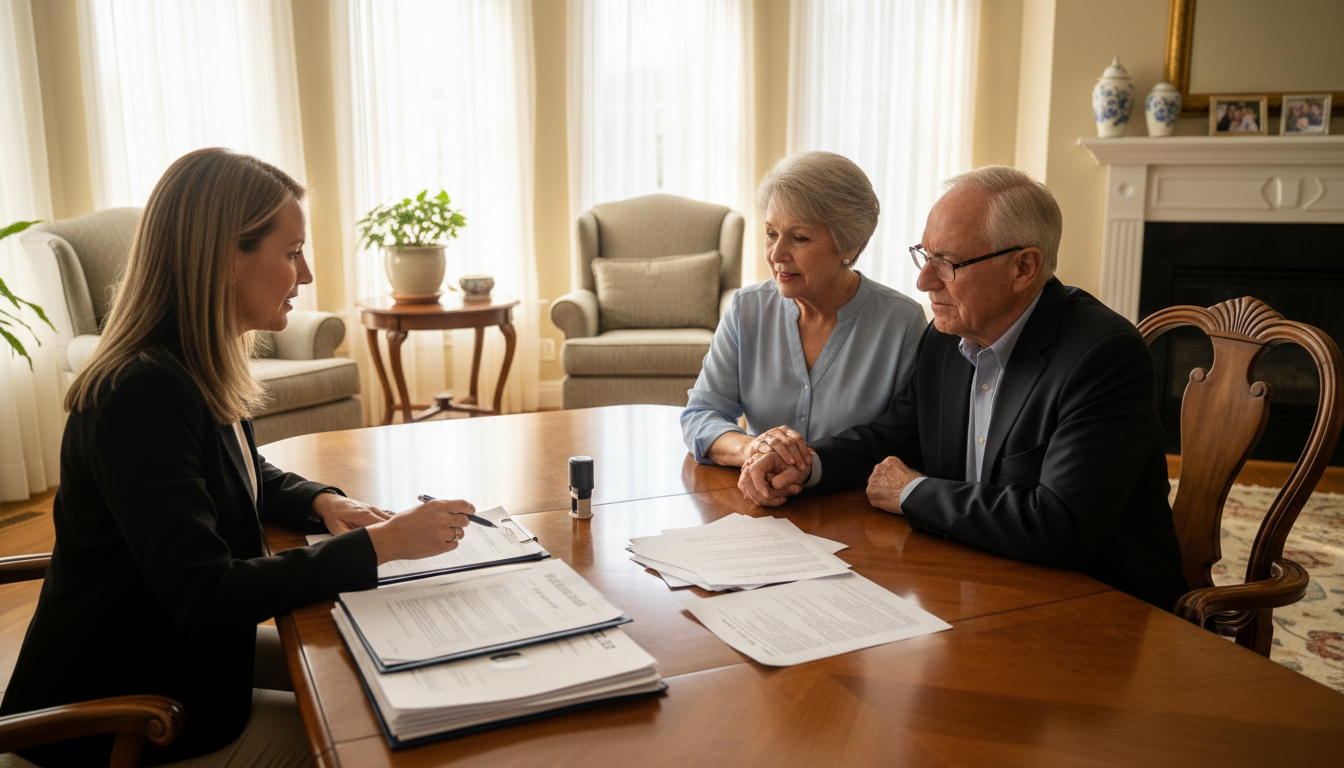
A common misconception in North Texas is that a Last Will and Testament must be notarized to be legally binding. Under Texas law, a formal Will is technically valid if it is signed by the testator and at least two credible witnesses who are at least 14 years old. However, relying on this minimum requirement is a significant tactical error that often leads to avoidable complications during probate.
The real value of an estate planning documents Texas notary session for a Will lies in the execution of the Self-Proving Affidavit. Governed by Texas Estates Code Section 251.104, this affidavit is a specific attachment where the testator and witnesses swear before a notary that the Will was signed with the required formalities. While the Will itself does not require a seal, this affidavit absolutely does.
Without this notarized attachment, the probate process becomes significantly more burdened. When the testator passes away, the executor must locate the original witnesses and bring them to the probate court to testify in person that they witnessed the signing. This presents a major logistical hurdle for DFW families, especially if decades have passed and witnesses have moved out of the Metroplex, changed names, or are no longer living. If the witnesses cannot be found, the estate may face costly delays and additional evidentiary requirements to prove the Will's authenticity.
By utilizing a mobile notary public, you ensure the Self-Proving Affidavit is completed correctly at the time of the original signing. This step allows the court to admit the Will to probate as self-proved without the need for witness testimony. This simple procedural addition saves your heirs substantial time, legal fees, and emotional stress during an already difficult period. Our team is well-versed in the specific sequencing required for these signatures, ensuring the notary's seal is placed precisely where it is needed to meet Texas statutory standards.
Statutory Durable Power of Attorney Notary Requirements

While a Will primarily addresses the distribution of assets after death, the Statutory Durable Power of Attorney is a vital tool for managing financial affairs during your lifetime. In Texas, this document grants an agent the authority to handle real estate transactions, banking, tax filings, and legal claims if the principal becomes incapacitated. Unlike a Will, which can technically exist without a notary seal under specific circumstances, a Texas Statutory Durable Power of Attorney is legally ineffective unless it is acknowledged before a notary public. This strict requirement ensures that financial institutions have a verified point of reference before granting someone access to your accounts.
Securing an estate planning documents Texas notary is often a time-sensitive matter for families in the DFW Metroplex. We frequently assist clients in Tarrant County who need a mobile notary public to visit a private home or office when a loved one begins to experience a decline in cognitive health. Speed is critical. Once a principal loses the capacity to understand the document they are signing, the window for a Power of Attorney closes, often forcing the family into expensive and public guardianship proceedings in probate court.
During estate document notarization, the notary acts as an impartial witness to the transaction. Our role involves more than just verifying a driver's license; we are trained to assess whether the signer is acting of their own free will and understands the nature of the powers they are granting. By verifying the identity and willingness of the principal in person, we provide a layer of protection against financial elder abuse and ensure the document meets the rigorous standards of the Texas Estates Code.
Medical Power of Attorney and Physician Directives

While the financial power of attorney strictly mandates a seal, Texas medical documents offer a degree of flexibility that often creates confusion during a crisis. Under the Texas Health and Safety Code, both a Medical Power of Attorney and a Directive to Physicians, commonly known as a Living Will, require specific execution to be valid. These documents must either be signed by two qualified witnesses or be acknowledged before a notary public.
Selecting the notary option is almost always the more secure and professional route, particularly when time is of the essence. In a clinical environment, finding two qualified witnesses who meet the strict statutory requirements can be surprisingly difficult. Texas law prohibits certain individuals from serving as witnesses, including the designated agent, the attending physician, or employees of the healthcare facility involved in the patient's care. Attempting to coordinate disinterested third parties in a hospital waiting room can lead to procedural errors that compromise the document's validity.
Utilizing a specialized hospital notary eliminates these hurdles. We frequently provide on-site estate document notarization at facilities such as Medical City Arlington and Texas Health Arlington Memorial, ensuring that the signer’s wishes are authenticated without the logistical strain of sourcing witnesses. By choosing an estate planning documents Texas notary to oversee the signing, you ensure the paperwork is executed with the same level of formality required for high stakes financial transactions. This provides peace of mind to both the family and the medical staff, as a notarized document carries a clear, verifiable record of the patient’s intent and identity.
Revocable Living Trusts and Real Estate Deeds
Beyond healthcare decisions, the management of physical and financial assets often centers on a Revocable Living Trust. This instrument serves as a private roadmap for asset management, yet its privacy does not exempt it from formal authentication. While Texas law provides flexibility for private contracts, financial institutions almost universally require a trust agreement to be notarized before they will recognize the trustee’s authority over accounts and investments. Without a clear notary seal, the trust remains a dormant document that banks may refuse to honor.
The most critical phase of this process is "funding" the trust, which involves the legal transfer of assets into the trust's name. For homeowners in the DFW Metroplex, this typically requires the execution of a Warranty Deed or a Lady Bird Deed. These instruments are the primary vehicles for moving real estate into a trust while often maintaining specific tax advantages. In Texas, a deed cannot be recorded in the property records of Tarrant County or Dallas County unless it has been properly acknowledged before a notary.
Errors during estate document notarization for real estate deeds can lead to title defects that are costly to resolve. Utilizing a mobile notary public ensures that every estate planning documents Texas notary session for trust funding is handled with the precision necessary for local recording offices. We verify that the legal descriptions and capacities match the trust requirements, allowing your real estate transfers to be recorded seamlessly and your trust to be fully operational.
Remote Online Notarization for Texas Estate Planning
The transition from physical paper to digital execution has simplified the process for North Texas residents who may be traveling or living abroad. Texas Government Code Chapter 406 authorizes remote online notary services, allowing signers to complete estate document notarization via secure, recorded audio-visual sessions. This technology uses multi-factor authentication, including credential analysis and knowledge-based authentication, to verify a signer's identity from anywhere in the world.
For most estate planning documents Texas notary requirements can be satisfied online, including Statutory Durable Powers of Attorney. Please note, Wills, codicils, and testamentary trusts are specifically excluded from the Texas Uniform Electronic Transactions Act and, accordingly, cannot be signed electronically or notarized online with an appearance before a notary public via videoconference when executing these documents. Texas Estates Code Section 251.051 sets out the specific requirements of a will, including that the will must be executed in person.
Coordinating a Signing in Sensitive Locations: Hospitals and Correctional Facilities
Sensitive locations require a specialized mobile notary public who understands strict access protocols and security mandates. In Tarrant County correctional facilities, identification is the primary logistical hurdle. While Texas law allows for the use of a current inmate identification card issued by the Texas Department of Criminal Justice (TDCJ) or the Federal Bureau of Prisons, having a valid passport or state ID ready can prevent delays if facility-specific rules change. We coordinate directly with facility administrators to ensure the estate planning documents Texas notary session adheres to all safety and privacy regulations.
Hospital environments at facilities like Medical City Arlington or Texas Health Arlington Memorial require a hospital notary who can navigate visitor restrictions and clinical schedules. We prioritize verifying that the signer is alert and cognitively capable of participating in estate document notarization at the time of the appointment. Because these settings involve heightened security or medical urgency, there is no room for clerical errors. A mistake on a Statutory Durable Power of Attorney could necessitate a second, difficult trip through security checkpoints or ICU protocols. Accuracy on the first visit is paramount to ensuring your legal protections are established without unnecessary frustration.
Ensuring your legacy is protected starts with following the correct notarization procedures for your Texas estate plan. By checking each requirement off your list, you can secure your future with peace of mind. If you prefer to have a professional handle these critical details, our team is ready to assist. We specialize in mobile services for Estate & Trust Documents to ensure everything is executed correctly the first time. Having an expert guide you through the process can save time and prevent future legal complications.